
Kachra nahi hai bojh. Gigbin hai nayi soch.
Pre-Consumer Textile Waste Management in India
Redefining how textile waste is managed — with structure, intent, and value
Gigbin works with textile manufacturers to bring order, consistency, and direction to pre-consumer textile waste — transforming scattered waste into managed resource streams.
The Industry Gap
India is one of the largest textile producers in the world.
Yet, textile waste management is still deeply unstructured.
At ground level, waste is often sorted manually — without defined processes, efficiency, or scale.
- Waste is handled without standard systems
- Segregation happens without consistency
- Materials are undervalued due to poor handling
- Significant financial loss for manufacturers
- Underutilised recyclable material
- Inefficient waste flow across the ecosystem
This is not a waste problem.
This is a management gap.
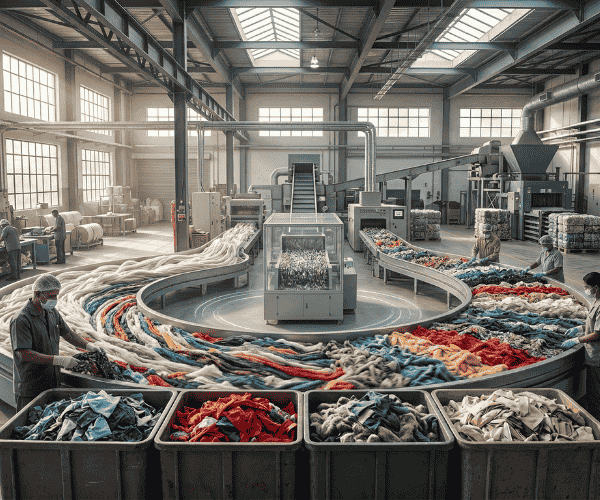
What is Pre-Consumer Textile Waste?
Pre-consumer textile waste refers to materials discarded during manufacturing, before reaching the end user.
These materials are not defective.
They are simply unused outputs of production.
Common Types:
- Fabric cutting scraps & offcuts
- Yarn and fibre waste
- Selvedge edges
- Excess or rejected stock
Why This Waste is Generated
Fabric Variations at Scale
Mass textile production often results in minor inconsistencies in color, texture, or finish — making certain portions unusable in final garments.
Cutting & Production Residues
During fabric cutting and pattern making, leftover material is inevitable — creating large volumes of unused textile pieces.
The Gigbin Approach
We are not here to overcomplicate.
We are here to organise what already exists.
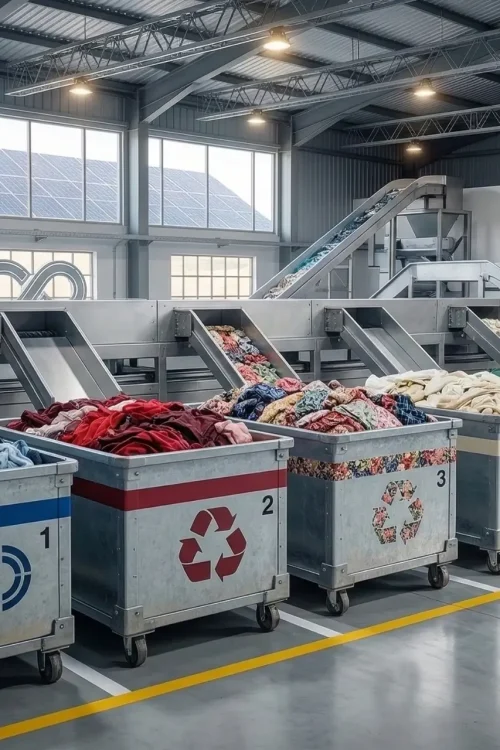
Organised factory waste collection
Consistent segregation practices
Streamlined waste handling
Better alignment with reuse & recycling channels
We focus on building practical systems that work on ground reality.
How Gigbin Works
01.
Factory Pickup
Scheduled collection of textile waste directly from manufacturers.
02.
Segregation & Sorting
Materials are separated into usable categories with better consistency.
03.
Structured Handling
Waste is managed in a more organised and controlled manner.
04.
Channelisation
Materials are directed towards reuse and recycling opportunities.
Business & Environmental Value
For Textile Manufacturers
Recover hidden value from waste
Reduce unorganised disposal losses
Improve operational efficiency
For the Industry
Move towards organised waste systems
Improve material utilisation
Enable better recycling outcomes
Textile waste is already valuable.
It just needs to be managed right.